
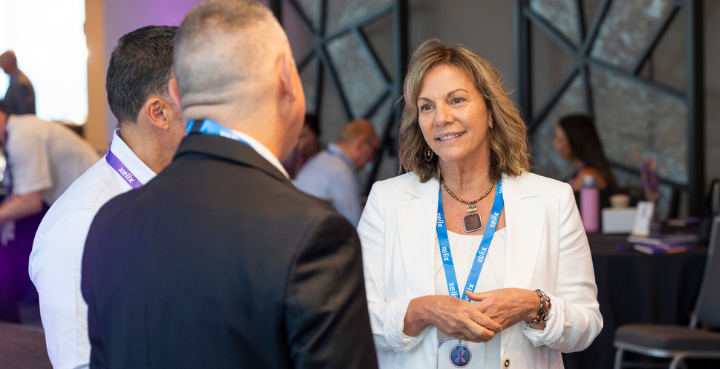
Xelix Connect brought together more than 50 senior leaders from across AP, Finance, Shared Services and P2P for a day of sessions, panel discussions, product updates and peer conversation.
As with every Xelix Connect event, the goal wasn't to deliver a series of presentations and send everyone home with a notebook full of slides. It was to create space for practitioners to learn from each other, compare experiences and have the kinds of conversations that don't always happen in day-to-day work.
Looking back on the day, a few themes surfaced repeatedly. Not just in the formal sessions, but in the discussions between them.
The first was that AI has firmly moved beyond the hype stage for most finance leaders. The questions being asked are no longer theoretical. People aren't asking whether AI will have an impact on AP and finance, they're asking where to start, how to prioritise, how to secure buy-in and how to make sure projects deliver measurable outcomes.
How to build a Finance AI roadmap from scratch
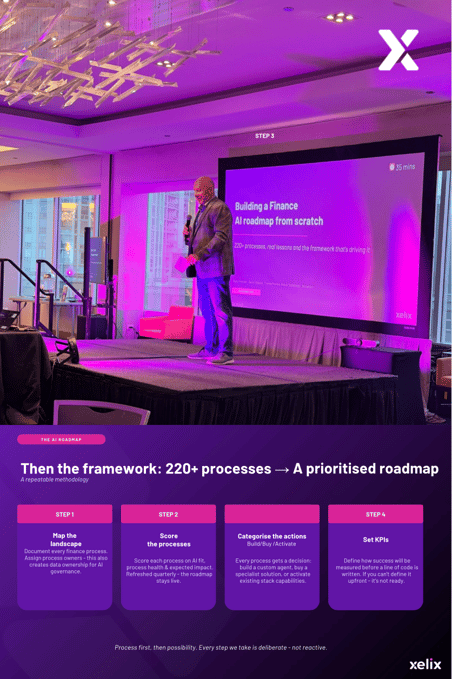
One of the clearest examples came from Ryan Ambrose, Senior Director of Finance Process, Data & Technology at Mortenson. Mortenson processes more than 300,000 invoices each year and has a clear mandate to accelerate AI adoption across the organisation. Rather than starting with technology, however, Ryan described a much more disciplined approach.
The team began by mapping 220+ finance processes and assigning ownership to each one. Every process is assessed against a consistent set of criteria, including process health, potential business impact and suitability for AI. The roadmap is reviewed regularly and adjusted as priorities change.
What resonated with many attendees wasn't the technology itself. It was the emphasis on process ownership and governance. In a market full of AI announcements and pilot projects, the organisations making meaningful progress often seem to be the ones spending time on the fundamentals.
Ryan also shared a framework that sparked a lot of discussion during the breaks: activate, buy, then build.
The idea is simple - start by making better use of capabilities that already exist within your technology stack. Then look at proven solutions that can deliver value quickly, only after that should organisations consider building something bespoke. It's a practical approach that helps keep AI initiatives tied to business outcomes rather than novelty.
The evolution of Accounts Payable
Another topic that surfaced repeatedly was the changing nature of work within Accounts Payable teams.
For years, transformation conversations focused on efficiency. How many invoices can be processed? How much manual effort can be removed? How can teams do more with less?
Those questions haven't disappeared, but the conversation is evolving.
Several speakers and attendees talked about how AP roles are becoming increasingly analytical. As automation takes care of more routine processing, teams are spending more time understanding exceptions, identifying patterns, improving controls and supporting wider business decisions.
Samuel Gonzalez, System Director of AP at a major US healthcare organisation, spoke about this shift directly during the AP leadership panel. His view was that technology should be used not only to automate work, but also to help drive new behaviours and ways of thinking. That creates a different challenge for leaders - implementing new technology is one thing, helping teams adapt to changing responsibilities is another.
The importance of change management came up throughout the day and often from organisations that have already gone through significant transformation.

Jacqui Long shared her experience leading AP teams through major operational change, including a shift that saw her team take on responsibilities well beyond traditional accounts payable activities. Her message was straightforward: successful transformation depends as much on people and process as it does on technology.
It's a point that often gets overlooked because technology is easier to talk about. New tools are visible, but new behaviours are harder to measure. Yet many of the obstacles organisations face have less to do with software and more to do with longstanding processes, stakeholder expectations and habits that have built up over time.
Several attendees reflected on the same challenge: The technology itself is often the easier part, the harder part is helping an organisation work differently once the technology is in place.
That theme carried into the final keynote of the day, where Hilary Gosher, Managing Director at Insight Partners, joined remotely to share an investor and CIO perspective on AI transformation.
One aspect of Hilary's session was the reminder that finance-led projects are increasingly being evaluated through an enterprise lens. Cost savings and departmental efficiencies still matter, but they are rarely enough on their own.
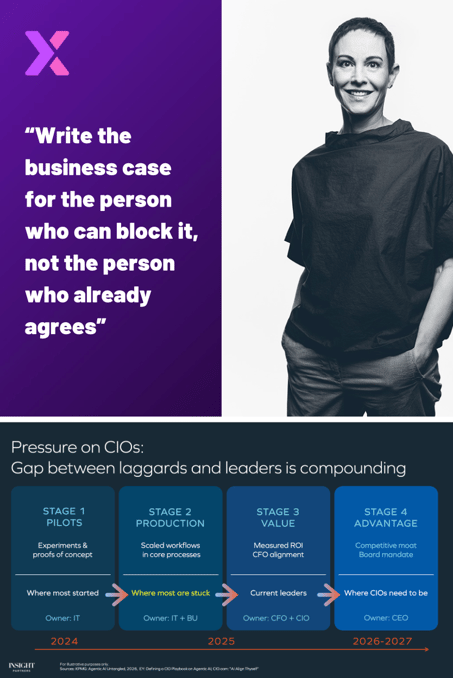
CIOs are thinking about scalability, governance, data readiness and long-term business value. Finance leaders who can frame initiatives in those terms are often far more successful at securing support and maintaining momentum.
The discussion prompted plenty of reflection in the room. Many organisations have experimented with AI over the last two years, but turning successful pilots into sustainable business outcomes remains a challenge.
Alongside these broader discussions, attendees also got a look at the latest developments across the Xelix platform.
Chris Nicol, VP Product, opened with a live benchmarking session that explored topics including touchless invoice rates, exception volumes and automation priorities. The responses provided an interesting snapshot of where leading AP teams are today. While levels of maturity vary, many organisations are now focused on tackling the operational friction that remains after the initial wave of automation.
Product updates across Transactions, Statements and Helpdesk reflected that reality. The focus wasn't on adding complexity. It was on helping teams work faster, automate more effectively and gain better visibility into the activities that still require human attention.
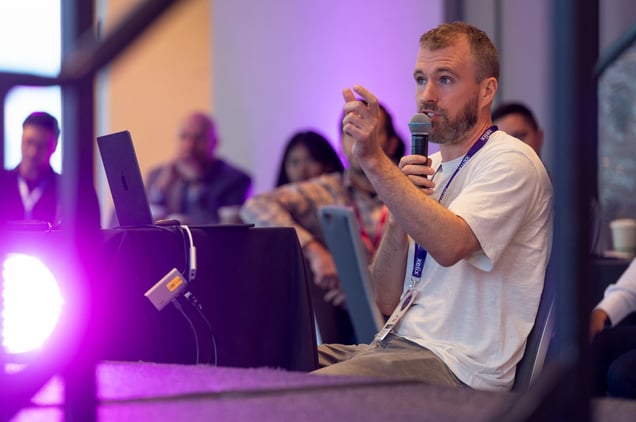
One of the most engaging moments came towards the end of the product session when Phil Watts, Co-Founder and Chief Product Officer, shared an early preview of a new product initiative. The details remain under wraps for now, but the reaction in the room was telling. The discussion that followed reinforced something that has always been central to how we build products at Xelix: the best ideas come from listening carefully to the people doing the work every day.
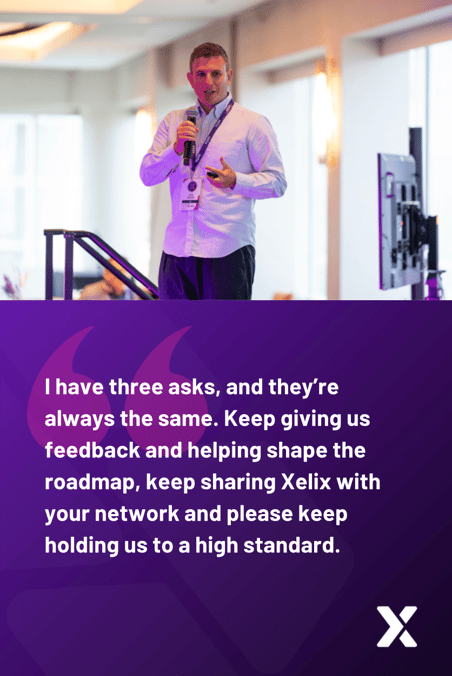
Every year, Xelix CEO, Paul Roiter closes his opening remarks with the same three requests.
-
Keep giving us feedback and helping shape the roadmap
-
Keep sharing Xelix with your network
-
Keep holding us to a high standard
Those requests have remained unchanged because they reflect the type of community we're trying to build.
The Xelix community
Today, 42% of Xelix customers are based in the US, up from 32% at the same point last year. As that community grows, events like Xelix Connect become increasingly valuable because they create opportunities for finance leaders to learn from one another.
The challenges facing AP teams are rarely unique. Whether the topic is AI adoption, supplier management, process improvement or organisational change, chances are someone else has already faced a similar problem and found a way through it.
What stood out in Chicago was that the organisations making the most progress aren't chasing every new trend. They're focusing on process ownership, investing in their people, building strong partnerships across the business and approaching transformation with a clear sense of purpose.
The technology will continue to evolve, the opportunity for finance leaders is making sure their organisations evolve with it.
We look forward to continuing that conversation at Xelix Connect 2027.